Introduction
Preterm birth and maternal mental health (MMH) disorders are closely interconnected, each having a significant impact on maternal and infant morbidity and mortality.1,2 Among wealthy countries, the United States has one of the highest preterm birth rates3 at approximately 10.4%.4 Additionally, MMH disorders impact up to 20% of women.5 The Centers for Disease Control and Prevention (CDC) defines preterm birth as birth before 37 completed weeks of gestation,4 and research has consistently shown strong bidirectional associations between preterm birth and MMH disorders.6,7,8 Understanding and addressing the complex and multifactorial relationship between MMH disorders and preterm birth is critical for improving both maternal and infant health outcomes.
This brief discusses current research on MMH disorders and preterm birth, as well as policy implications and recommendations for preventing and addressing these adverse maternal-child outcomes by moving upstream to diagnose, support, and treat early in pregnancy.
MMH as a Risk Factor for Preterm Birth
The most common MMH disorders are depression and anxiety,5,9 which, when experienced during pregnancy, have been consistently associated with an increased risk of preterm birth.6 In one large observational study, maternal psychiatric disorders were associated with increased odds of preterm birth across multiple gestational age categories: 32% higher odds of birth before 39 weeks’ gestation, 45% higher odds of birth before 37 weeks’ gestation, 47% higher odds of birth before 34 weeks’ gestation, and 57% higher odds of birth before 28 weeks’ gestation. Increased odds for preterm birth also differed by diagnosis: anxiety disorders with 68% higher odds, bipolar disorder with 54% higher odds, and depression with 31% higher odds.6 Another study found that those diagnosed with posttraumatic stress disorder (PTSD) had 40% higher odds of experiencing preterm birth when compared to those diagnosed with any other mental health disorders.10 Notably, those with two or more (“comorbid”) psychiatric disorders had the highest odds for preterm birth: a diagnosis of bipolar disorder with co-occurring anxiety and/or depression disorders had 70% increased odds, and depression with co-occurring anxiety disorders had 130% higher odds.
Preterm Birth as a Risk Factor for MMH Disorders
While MMH disorders are associated with increased risk of preterm birth, the relationship is bidirectional and multifaceted.
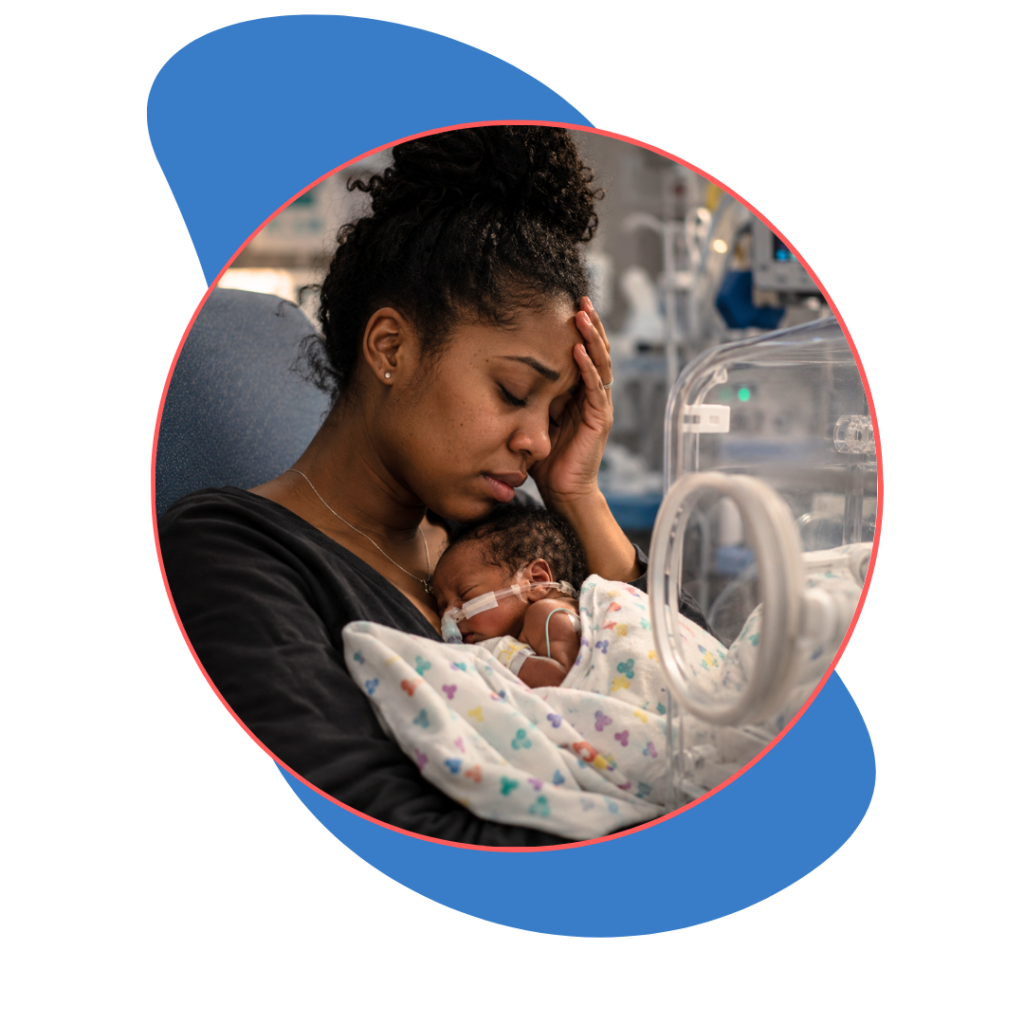
The occurrence of a preterm birth can also contribute to the development or worsening of MMH disorders. Mothers of preterm infants experience substantially higher rates of postpartum depression, anxiety, stress, and post-traumatic stress disorder (PTSD) symptoms compared with mothers of term infants.7,8 A systematic review found that parents of very preterm infants frequently experience persistent psychological distress throughout the postpartum period, particularly during prolonged neonatal intensive care unit (NICU) hospitalization.7
The NICU environment itself may function as a significant traumatic stressor due to uncertainty surrounding infant survival, medical complications, disrupted parent–infant bonding experiences, caregiving strain, and prolonged separation from the infant.8 Other adverse outcomes, such as pregnancy loss and infant death, are also strongly associated with subsequent MMH disorders. Women with prior psychiatric histories or undiagnosed mental health conditions in pregnancy may be particularly vulnerable to worsening psychological symptoms following adverse pregnancy outcomes or NICU admission.
The impact of preterm birth also spans beyond the immediate perinatal period and can contribute not only to medical complications but to intergenerational mental health vulnerability.
Individuals born prematurely experience an increased risk of psychiatric conditions later in life compared with term-born peers.11 These long-term mental health outcomes may increase vulnerability to maternal mental health disorders during future pregnancies, thereby contributing to a potential intergenerational cycle linking psychiatric disorders and adverse birth outcomes. The association between prematurity and later psychiatric morbidity highlights the importance of early intervention and longitudinal mental health support for both parents and children affected by preterm birth.11
Preterm Birth and Infant Mortality
Additionally, preterm birth and low birth weight are leading causes of infant mortality in the United States. Significant disparities contribute to high preterm birth and infant mortality for Black women and infants.2 Similar disparities are observed among women experiencing socioeconomic disadvantage, limited access to prenatal and behavioral healthcare services, inadequate insurance coverage, and residence in rural or maternity care desert regions.2 Structural inequities, chronic stress exposure, racism, healthcare access challenges, and broader social determinants of health are believed to contribute substantially to these disparities.12,13 These inequities may further compound vulnerability to maternal mental health disorders both during pregnancy and following adverse infant outcomes, including preterm birth and NICU hospitalization.
Summary
Collectively, these findings highlight the importance of routine screening and treatment of maternal mental health disorders beginning early in pregnancy, consistent with the American College of Obstetricians and Gynecologists (ACOG) clinical practice guidelines.14 These findings additionally underscore the need for targeted psychological support and ongoing mental health screening for parents of infants requiring NICU hospitalization.
Collectively, these findings highlight the importance of routine screening and treatment of maternal mental health disorders beginning early in pregnancy
Policy Implications
The growing evidence linking the multifaceted relationship between MMH disorders and preterm birth highlights the need to prioritize adequate stress reduction support, maternal mental health screening and treatment, early in pregnancy. The following are important policy considerations:
- Medicaid agencies and insurers should:
- Prioritize prenatal screening and care plan development and management, including providing adequate reimbursement and pay-for-performance incentives.
- Prioritizing monitoring, screening, and intervention rates during pregnancy.
- Policy makers must ensure all women have prenatal care, including MMH screening, by addressing maternity care deserts with urgency, looking to the comprehensive maternity care federally qualified health care center (FQHC) model as a solution.
- Given that preterm birth disproportionately impacts minority populations, particularly Black women, culturally appropriate MMH programs are important. This could take the form of group prenatal care and group parenting courses, where MMH education could be provided by culturally diverse community health workers, for example.
- For mothers and families who have birthed preterm infants, it’s critical to have robust postpartum services, including NICU support, paid leave, in-home infant care, and ongoing postpartum peer and mental health support.
Conclusion
Ultimately, addressing the intersectionality of preterm birth and maternal mental health requires that U.S. policymakers reduce stressors for high risk populations and improve access to maternity care and trusted culturally concordant healthcare providers.
Equally as important, reducing preterm birth requires efforts to move upstream starting in pregnancy, to screen for and provide adequate interventions for maternal mental health disorders.
Finally, mothers and families who give birth to preterm infants are at high risk for mental health challenges and robust postpartum support is necessary.
References
- CDC. (2026, April). Pregnancy-Related Deaths: Data from Maternal Mortality Review Committees. Maternal Mortality Prevention. https://www.cdc.gov/maternal-mortality/php/data-research/mmrc/index.html ↩︎
- CDC. (2024, December 12). Infant Mortality. Maternal Infant Health. https://www.cdc.gov/maternal-infant-health/infant-mortality/index.html ↩︎
- Bronstein, J. M., Wingate, M. S., & Brisendine, A. E. (2018). Why Is the U.S. Preterm Birth Rate So Much Higher Than the Rates in Canada, Great Britain, and Western Europe? International Journal of Health Services: Planning, Administration, Evaluation, 48(4), 622–640. https://doi.org/10.1177/0020731418786360 ↩︎
- Centers for Disease Control and Prevention. (2026). Births: Provisional Data for 2025. National Center for Health Statistics, U.S. Department of Health and Human Services. https://www.cdc.gov/nchs/data/vsrr/vsrr043.pdf ↩︎
- Gavin, N. I., Gaynes, B. N., Lohr, K. N., Meltzer-Brody, S., Gartlehner, G., & Swinson, T. (2005). Perinatal depression: A systematic review of prevalence and incidence. Obstetrics and Gynecology, 106(5 Pt 1), 1071–1083. https://doi.org/10.1097/01.AOG.0000183597.31630.db ↩︎
- Männistö, T., Mendola, P., Kiely, M., O’Loughlin, J., Werder, E., Chen, Z., Ehrenthal, D. B., & Grantz, K. L. (2016). Maternal psychiatric disorders and risk of preterm birth. Annals of Epidemiology, 26(1), 14–20. https://doi.org/10.1016/j.annepidem.2015.09.009 ↩︎
- Sandnes, R., Le Floch, M., Riquin, E., Nocus, I., Müller, J. B., & Bacro, F. (2024). Parental stress and mental health outcomes following very preterm birth: A systematic review of recent findings. Journal of Affective Disorders, 355, 513–525. https://doi.org/10.1016/j.jad.2024.03.154eterm Birth: A Review. Journal of Affective Disorders. https://www.sciencedirect.com/science/article/pii/S0165032724005780 ↩︎
- van Wyk, L., Majiza, A. P., Ely, C. S. E., & Singer, L. T. (2024). Psychological distress in the neonatal intensive care unit: A meta-review. Pediatric Research, 96(6), 1510–1518. https://doi.org/10.1038/s41390-024-03599-1 ↩︎
- Ayers, S., Sinesi, A., Meade, R., Cheyne, H., Maxwell, M., Best, C., McNicol, S., Williams, L. R., Hutton, U., Howard, G., Shakespeare, J., Alderdice, F., Jomeen, J., & MAP Study Team. (2024). Prevalence and treatment of perinatal anxiety: Diagnostic interview study. BJPsych Open, 11(1), e5. https://doi.org/10.1192/bjo.2024.823 ↩︎
- Dubey, P., Dwivedi, A. K., Sharma, K., Martin, S. L., Thompson, P. M., & Reddy, S. Y. (2025). Associations of mental disorders with maternal health outcomes. Communications Medicine, 5(1), 350. https://doi.org/10.1038/s43856-025-01062-8 ↩︎
- Fieß, A., Hartmann, A., Ernst, M., Schuster, A. K., Mildenberger, E., Brähler, E., Urschitz, M. S., Pfeiffer, N., Beutel, M. E., Gißler, S., & Tesarz, J. (2025). Sequelae of preterm birth over the lifespan: An exploratory analysis of behavioral problems in childhood and increased risk of major depression and anxiety in adulthood from a cohort study. eClinicalMedicine, 85, 103316. https://doi.org/10.1016/j.eclinm.2025.103316 ↩︎
- Policy Center for Maternal Mental Health. (2023). Black Maternal Mental Health Issue Brief. https://policycentermmh.org/black-maternal-mental-health-issue-brief/ ↩︎
- Policy Center for Maternal Mental Health. (2025, August 20). Addressing Maternal Mental Health in Rural Communities. http://www.doi.org/10.69764/RMMH2025 ↩︎
- The American College of Obstetricians and Gynecologists. (2023). Screening and Diagnosis of Mental Health Conditions During Pregnancy and Postpartum. https://www.acog.org/clinical/clinical-guidance/clinical-practice-guideline/articles/2023/06/screening-and-diagnosis-of-mental-health-conditions-during-pregnancy-and-postpartum ↩︎