Rural Maternal Mental Health
Learn About our Rural Health Transformation Learning Network Here
Maternal Mental Health in Rural Communities
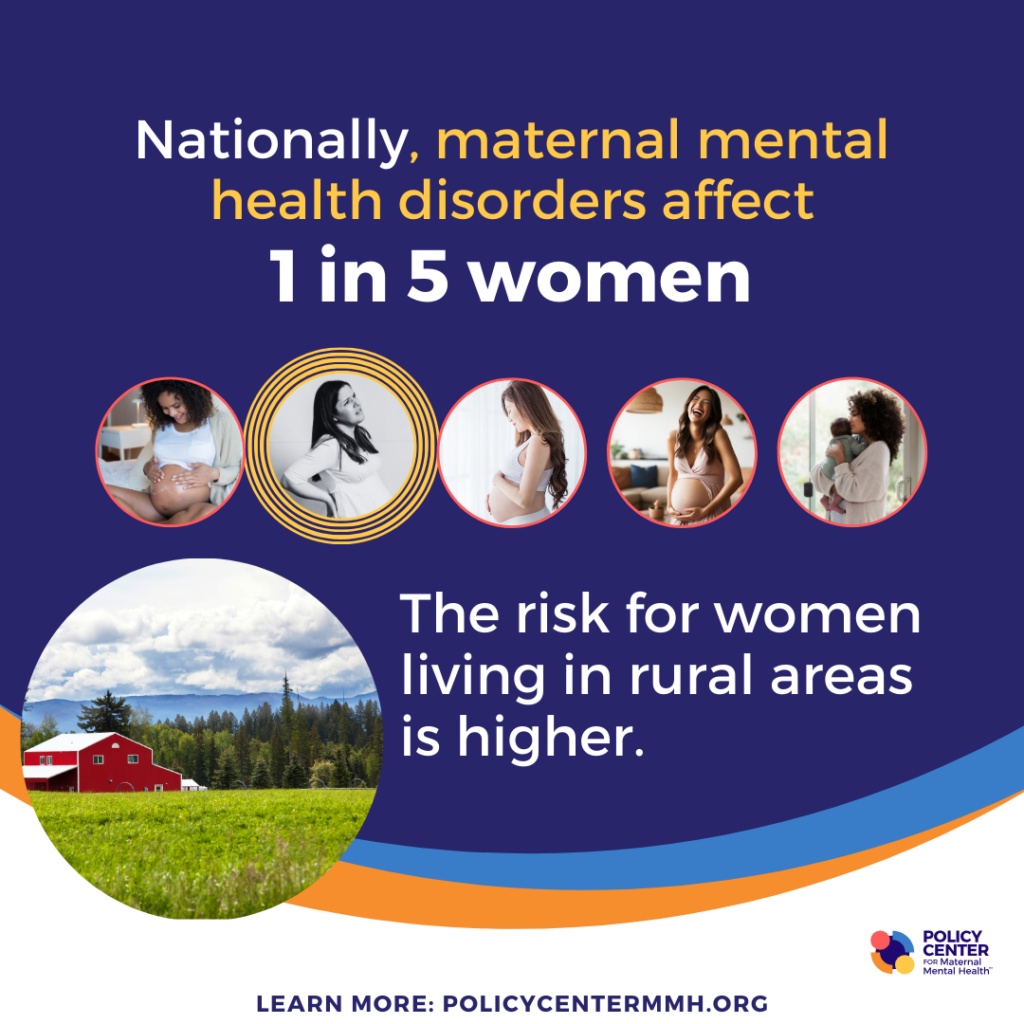
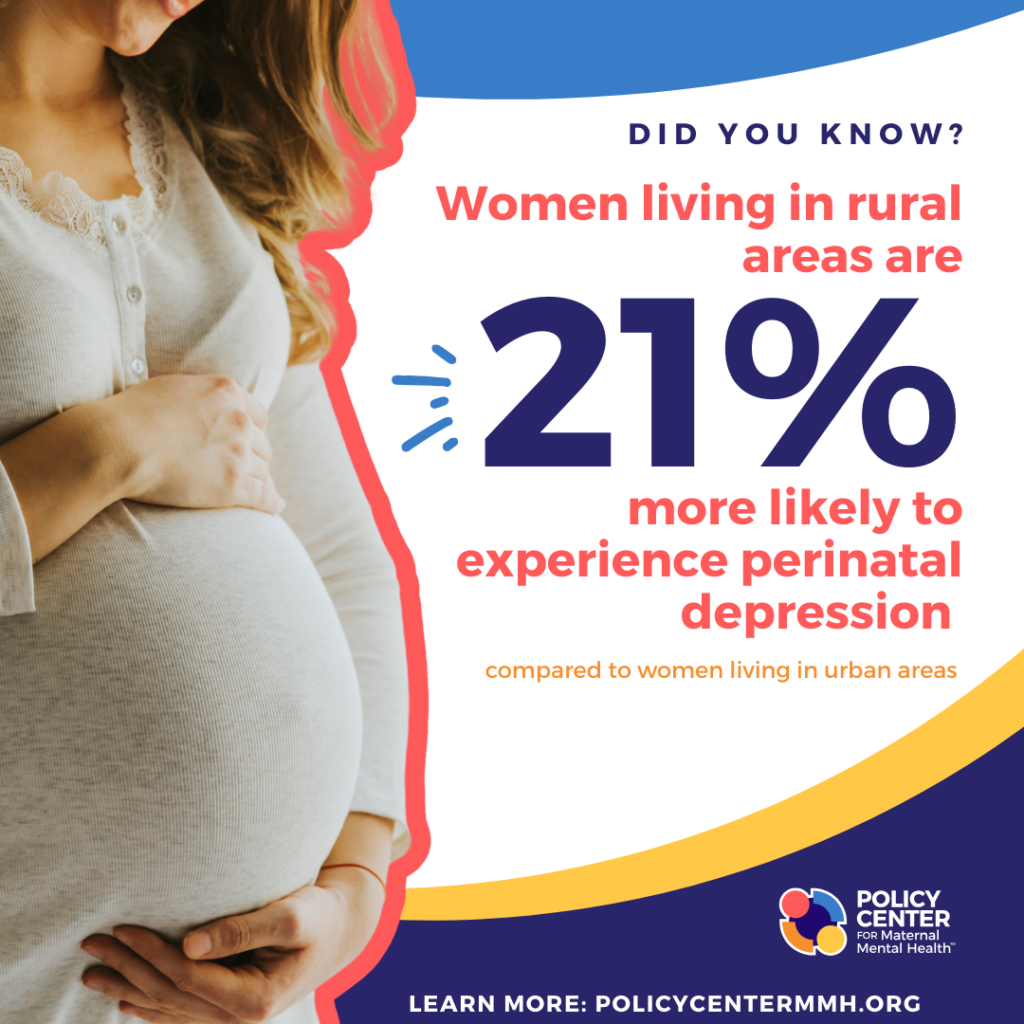
Women living in rural communities are 21% more likely to experience perinatal depression and have increased risk for maternal suicide than women living in urban spaces.1,2

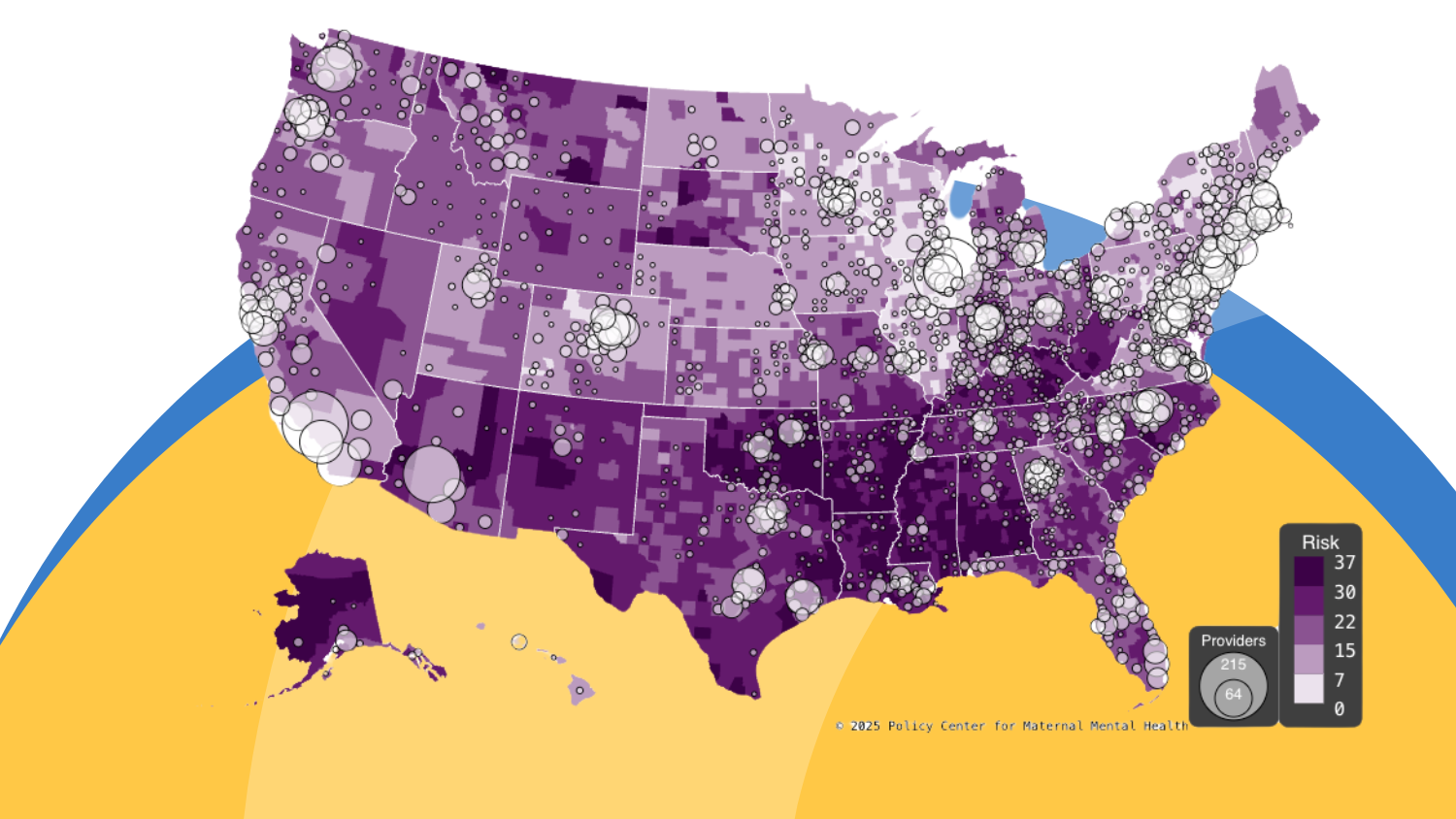
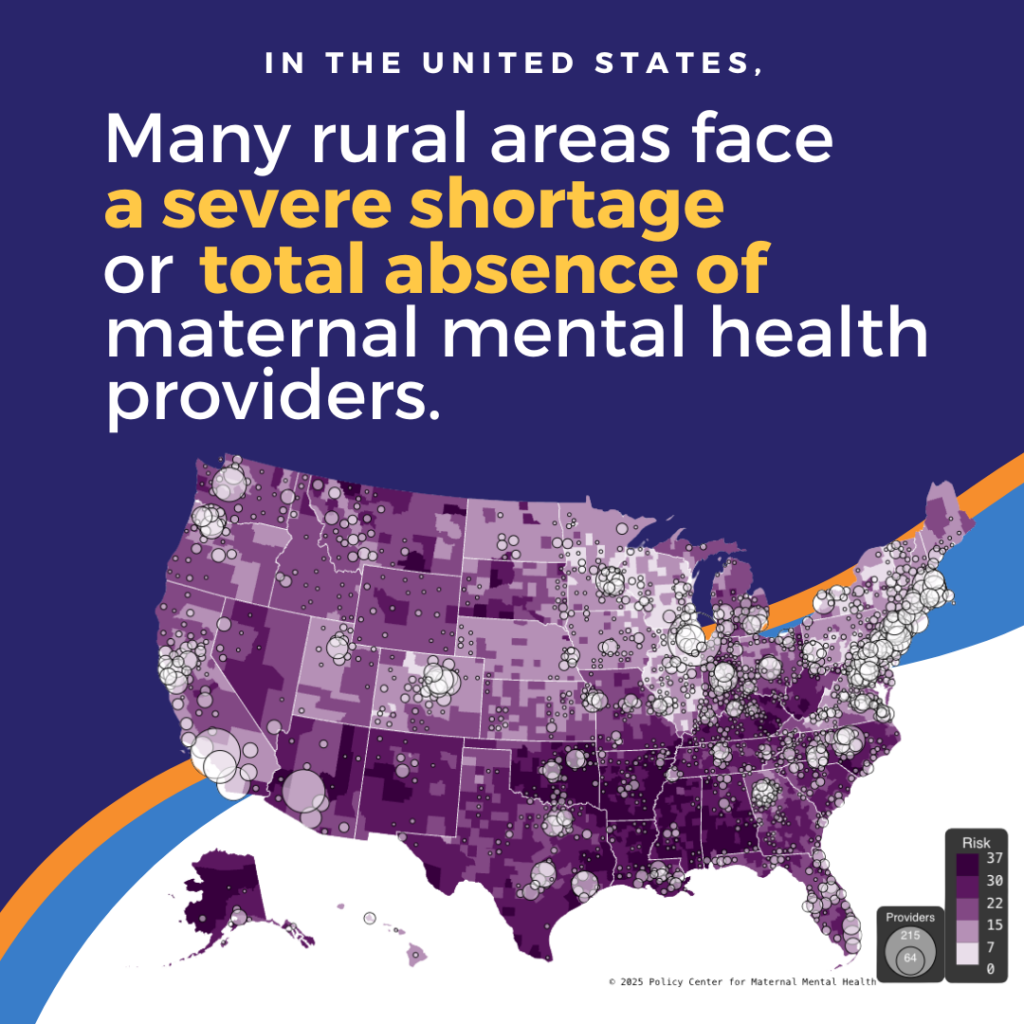
Rural counties are disproportionately affected by “severe” risk for maternal mental health disorders, as outlined in our most recent report, 2025 U.S. Maternal Mental Health Risk and Resources by County.3,4
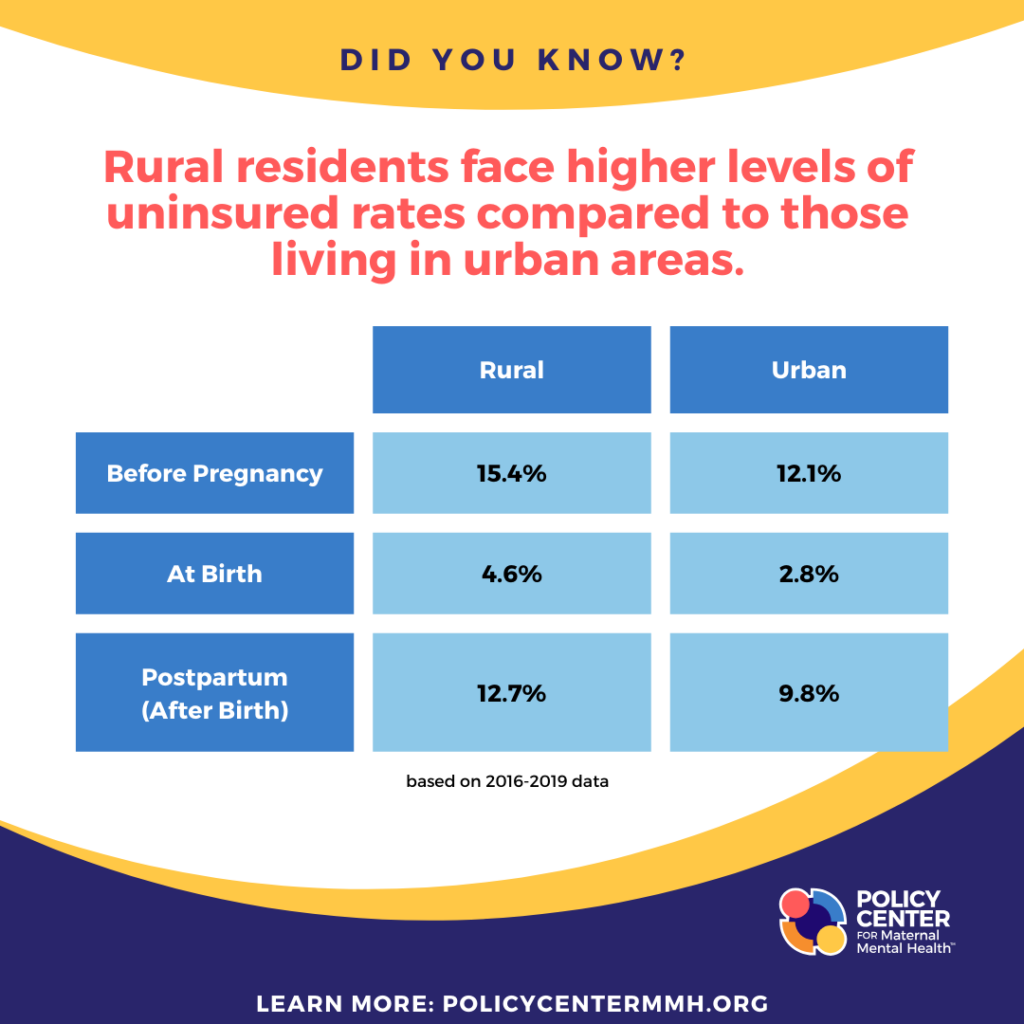
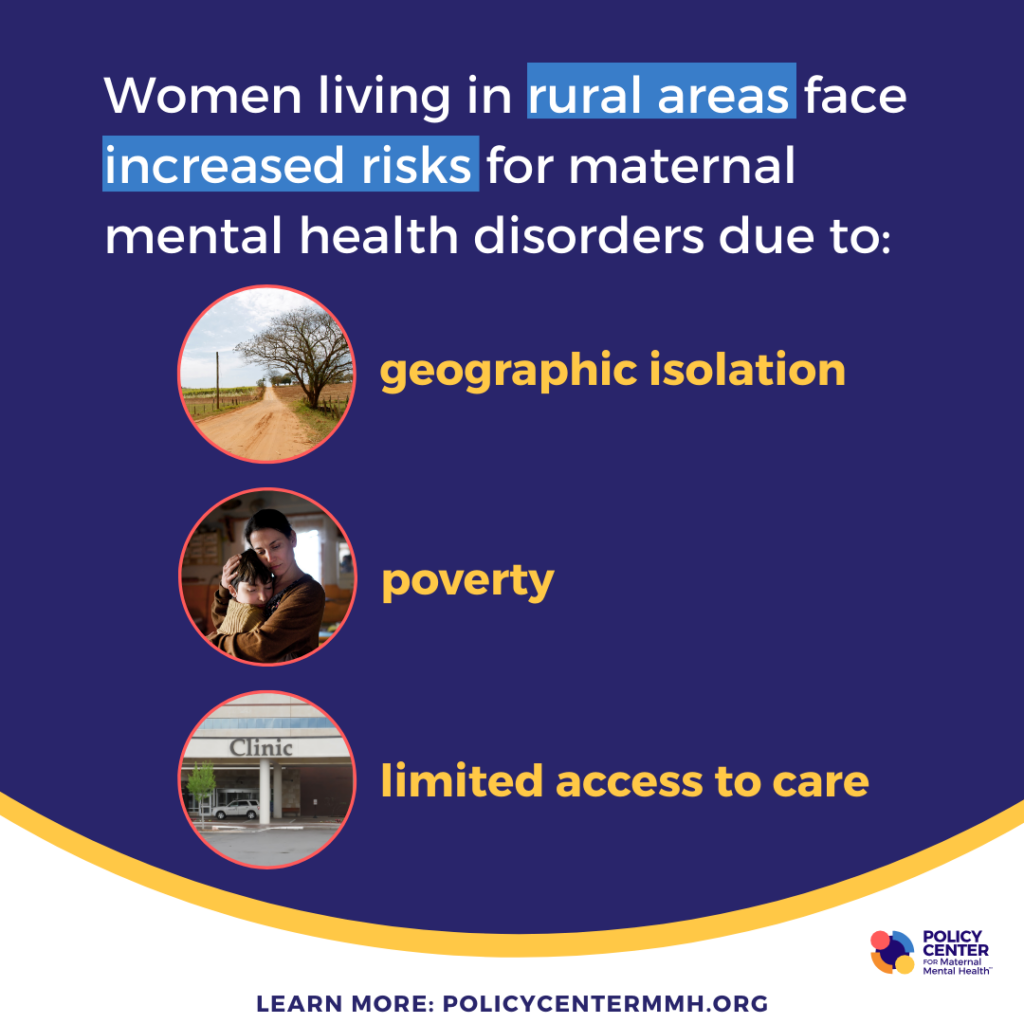
Barriers to treatment in rural communities can include geographic isolation, healthcare workforce shortages, transportation barriers, communication difficulties, insurance coverage lapses, and limited behavioral health provider access.5,6,7 Rural women also face disparities due to limited access to family planning services, including abortion and contraception access.8
In 2025, the Rural Health Transformation (RHT) Program was authorized, allocating $50 billion to states over five years between fiscal year 2026 and 2030.9 This program is an opportunity to strengthen maternal mental health and family well-being through an investment in rural communities.1 This shift in policy focus highlights the importance of the resources compiled on this page, developed to support informing improvements in rural maternal mental health.
The Policy Center is available to consult with states. Email [email protected] for more information.
Article
Strengthening Rural Maternal Mental Health
This article, written by the Policy Center in partnership with the National Governors Association, explores opportunities to strengthen rural health and maternal mental health through strategies like workforce development, telehealth, and mobile care.

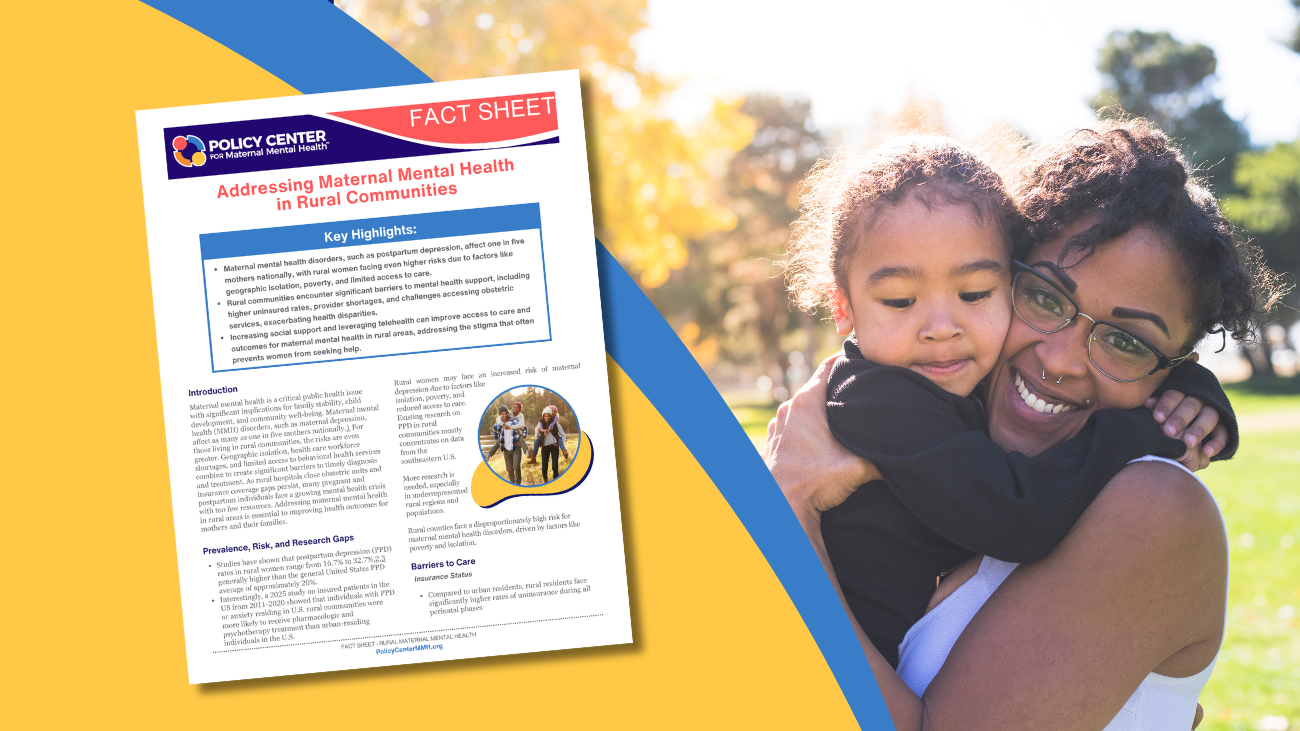
Fact Sheet
Addressing Maternal Mental Health in Rural Communities
Read our August 2025 fact sheet assessing maternal mental health in rural areas, including barriers to care, prevalence, and facilitators to improved outcomes.
Report
2025 U.S. Maternal Mental Health Risk and Resources by County
This 2025 report provides an update on the U.S. risk for suffering from maternal mental health disorders and where the greatest need for providers is, by county. Explore this interactive map, showing risk factor scores and provider coverage details by county.
Report
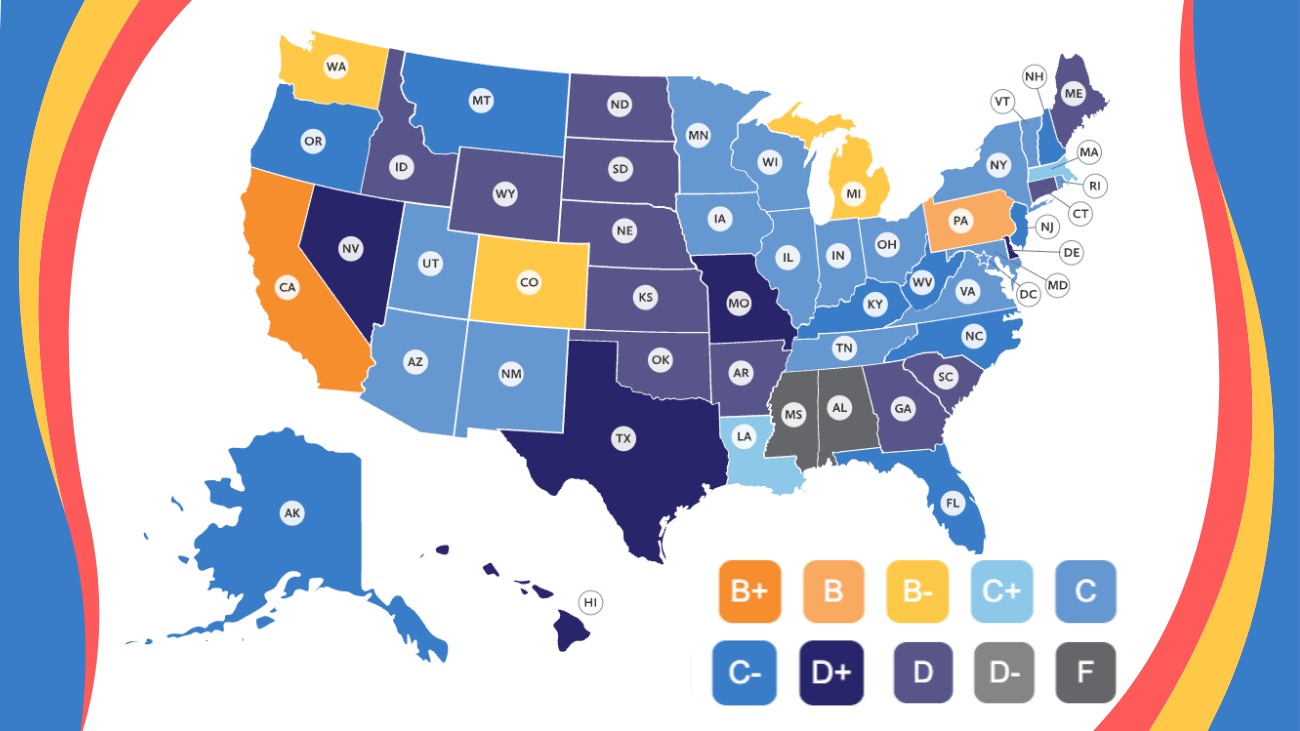
2025 State Report
The overall maternal mental health grade in the United States improved from a D+ in 2024 to a C- in 2025. Access the report to locate your state’s report card and assess domains, including provider access, screening, and insurance coverage.
Awareness
National Rural Health Day
The National Organization of State Offices of Rural Health (NOSORH) has designated the third Thursday of November to celebrate the “Power of Rural” on National Rural Health Day (NRHD).
Community Resource
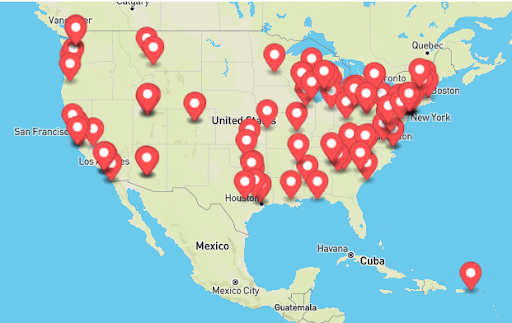
Maternal Mental Health Nonprofit Map
Search for local maternal mental health nonprofits in your community, or add your nonprofit to our map!

Rural Maternal Mental Health Resources
- The Rural Health Information Hub provides resources, data, links to funding opportunities, and news relevant to rural health.
- The Rural Maternal Health Toolkit from the Rural Health Information Hub includes evidence-based and promising models and resources to support rural maternal health, including modules and resources relevant to maternal mental health and substance use disorders.
- A report from the Commonwealth Fund, Restoring Access to Maternity Care in Rural America, highlights maternity care deserts and national initiatives and partnerships working to improve maternal outcomes in rural communities.10
- The Commonwealth Fund has also released a 2025 report, Maternal Mortality in the United States, 2025, highlighting both rural health care disparities and behavioral health challenges.11
- A March 2025 review in the Journal of Rural Health, Rural maternal health interventions: A scoping review and implications for best practices, explores different interventions for rural maternal health care, including mental health interventions.5
- The National Rural Health Association (NHRA) is a national membership association providing leadership on rural health issues and hosts a number of rural health-related events annually, including conferences and policy institutes.
- A 2024 white paper from the NRHA, Maternal health in rural America, explores different issues, including workforce shortages and financial barriers.12
- A 2021 policy brief from the NRHA explores the closing of rural obstetric units.13
- Established in 1995, the mission of the National Organization of State Offices of Rural Health (NOSORH) is to promote the capacity of State Offices of Rural Health and their stakeholders to improve health in rural America through leadership development, advocacy, education and partnerships.
- NOSORH has spearheaded National Rural Health Day, held on the third Thursday of November each year.
- The National Association for Rural Mental Health (NARMH) is a membership organization that aims to connect diverse voices in rural mental health, including through an annual national conference.
- A multidimensional rurality index in a study, from Daniel Baslock of Virginia Commonwealth University and Nari Yoo of the University of Michigan in The Milbank Quarterly, offers a comprehensive ranking of U.S. states across three indicators (land area, population density, and population share).14,15
- The Rural Maternity and Obstetrics Management Strategies (RMOMS) Program is a four-year program with the goal of improving health outcomes for mothers and infants by increasing maternal and obstetrics care in rural communities. The program includes data collection, leveraging telehealth, and improving financial sustainability. To view previous awardees and networks, including states represented in the program, visit the RMOMS website.16
Telehealth & Rural Maternal Mental Health
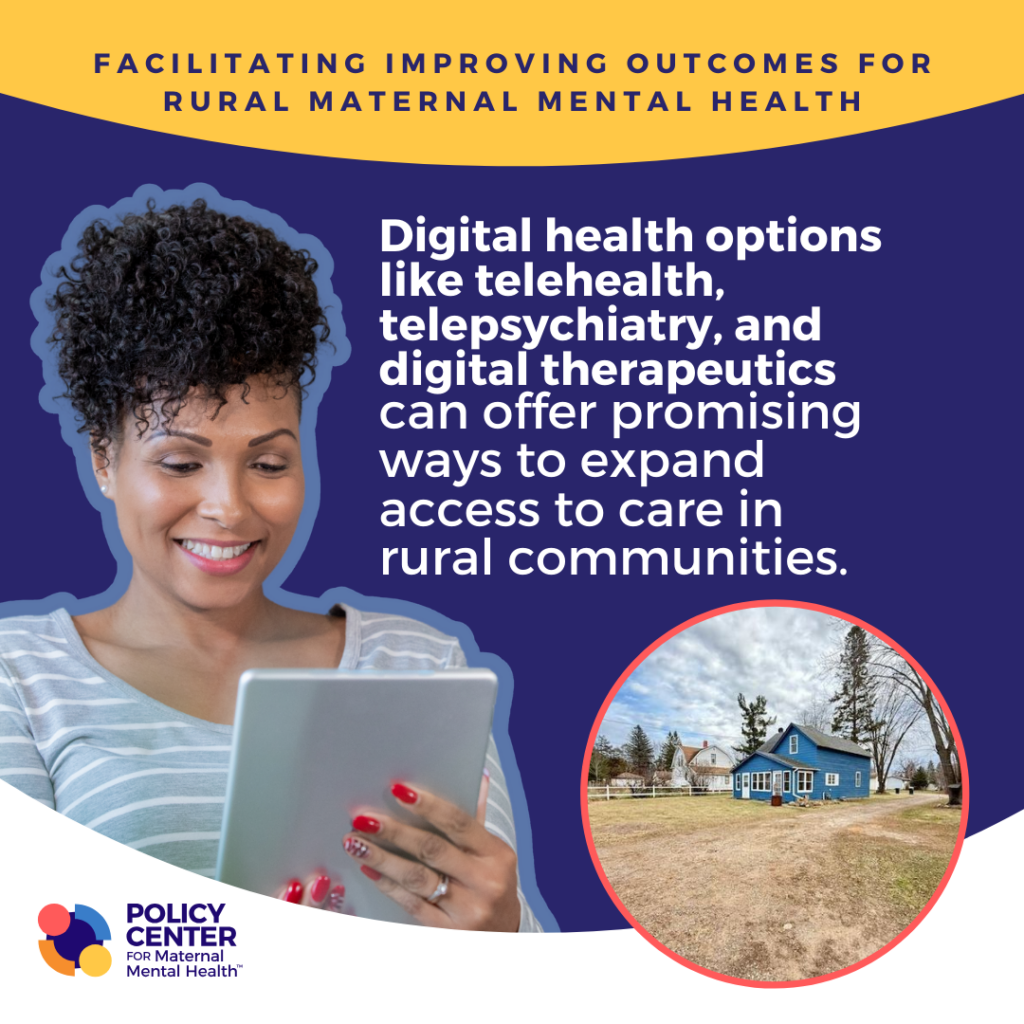
In our August 2025 fact sheet, Addressing Maternal Mental Health in Rural Communities, we identified telehealth, telepsychiatry, and digital therapeutics as promising ways to expand access to maternal mental health care in rural areas.6,17
The COVID-19 pandemic spurred new opportunities for telehealth.18 Programs like Medical University of South Carolina’s [MUSC] Women’s Reproductive Behavioral Health Program transitioned a program to a telehealth setting, allowing an opportunity to analyze lessons learned.18
Eastern Carolina University also launched a program called Maternal Outreach Through Telehealth for Rural Sites: The MOTHeRS Project, and the program offered telepsychiatry and screening opportunities.19
PCORI conducted a review, A Rapid Review of Telehealth Strategies for the Delivery of Maternal Health Care, to understand benefits and harm of telehealth strategies and approaches, including a review of studies on mental health care. This review found that adding telehealth to in-person mental health care yielded similar or better outcomes compared to typical care.20
A 2023 review showed promise with telemedicine interventions as an intervention for mental health-related outcomes amongst pregnant women, but emphasized further research was needed for anxiety-related outcomes and that there is no one-size-fits-all approach.21
Recent research involving a telemedicine psychotherapy intervention has also shown promise with telemedicine for perinatal depression and anxiety symptoms, and a smartphone-based mindfulness training intervention has shown promise in improving perinatal depression.22,23 In April 2024, the Policy Center featured a blog on the first digital therapeutic for maternal mental health approved by the FDA, Curio’s MamaLift Plus™, an eight-week prescription digital therapeutic.
Resources: Telehealth at the Intersection of Rural Health, Behavioral Health, and Maternal Mental Health
- The Rural Health Information Hub as a topic guide on Telehealth and Health Information Technology in Rural Healthcare.
- Read the best practice guide from HHS, Telehealth for maternal mental health. There is also a best practice guide for Telehealth for behavioral health care.
- Telehealth in the Prenatal and Postpartum Periods | A column from Summer Sherburne Hawkins, PhD, MS, reflecting on the growth of telehealth before, during, and after the COVID-19 pandemic.
- Leveraging Telehealth to Improve Access to Care for Maternal Health | An article/commentary exploring ways telehealth can help bridge the gap in maternal mental health care, including considerations for care in maternity care deserts.
- Telemedicine and Pregnancy Care | An issue brief from KFF exploring telemedicine and pregnancy care, including mental health care and cost considerations.
The Maternal Outreach Through Telehealth for Rural Sites (MOTHeRS) Project, based out of North Carolina, focuses on enhancing access to healthcare services and offers a multidisciplinary approach that includes mental health support
Social Media Graphics
Social Media Messages
| Curious about Risk Factor Scores (RFS) in your county, and learning more about resource and provider availability? View an interactive county map: https://policycentermmh.org/2025-us-maternal-mental-health-risk-and-resources/ | Learn how your state was graded for maternal mental health policy in 2025: https://policycentermmh.org/state-report-cards/ |
| Pregnant women living in rural areas face higher risk for maternal mental health disorders. Poverty, isolation, transportation issues, and issues accessing care can contribute. Learn more: https://policycentermmh.org/maternal-mental-health-in-rural-communities/ | Explore an interactive map visualizing maternal mental health risk factor scores and provider coverage details in your county: https://mmhmap.com/ |
References
- National Governors Association & Policy Center for Maternal Mental Health. (2025, November 4). Strengthening Rural Maternal Mental Health. Strengthening Rural Maternal Mental Health. https://policycentermmh.org/strengthening-rural-maternal-mental-health/ ↩︎
- Nidey, N., Tabb, K. M., Carter, K. D., Bao, W., Strathearn, L., Rohlman, D. S., Wehby, G., & Ryckman, K. (2020). Rurality and Risk of Perinatal Depression Among Women in the United States. The Journal of Rural Health, 36(1), 9–16. https://doi.org/10.1111/jrh.12401 ↩︎
- Policy Center for Maternal Mental Health. (2025). Maternal Suicide in the U.S. – The Latest Data And Ongoing Opportunities for Health Care System Change. https://policycentermmh.org/maternal-suicide-issue-brief-2025/ ↩︎
- Orsolini, L., Valchera, A., Vecchiotti, R., Tomasetti, C., Iasevoli, F., Fornaro, M., De Berardis, D., Perna, G., Pompili, M., & Bellantuono, C. (2016). Suicide during Perinatal Period: Epidemiology, Risk Factors, and Clinical Correlates. Frontiers in Psychiatry, 7. https://doi.org/10.3389/fpsyt.2016.00138 ↩︎
- Gordon, R. D., Kishi, A., Brown, J. A., Voisin, C., Thomas, N., Riley, S. R., Fareed, N., Bunger, A., Gillespie, S. L., Venkatesh, K. K., Juckett, L., & Brill, S. B. (2025). Rural maternal health interventions: A scoping review and implications for best practices. The Journal of Rural Health, 41(1), e70007. https://doi.org/10.1111/jrh.70007 ↩︎
- Policy Center for Maternal Mental Health. (2025). Addressing Maternal Mental Health in Rural Communities [Fact Sheet]. http://www.doi.org/10.69764/RMMH2025 ↩︎
- Mollard, E., Hudson, D. B., Ford, A., & Pullen, C. (2016). An Integrative Review of Postpartum Depression in Rural U.S. Communities. Archives of Psychiatric Nursing, 30(3), 418–424. https://doi.org/10.1016/j.apnu.2015.12.003 ↩︎
- American College of Obstetricians and Gynecologists. (2014, February). Health disparities in rural women. Committee Opinion No. 586. https://www.acog.org/clinical/clinical-guidance/committee-opinion/articles/2014/02/health-disparities-in-rural-women ↩︎
- Centers for Medicare & Medicaid Services. (2025). Rural Health Transformation (RHT) Program. Centers for Medicare & Medicaid Services. https://www.cms.gov/priorities/rural-health-transformation-rht-program/overview ↩︎
- Martha Hostetter & Sarah Klein. (2021, September 30). Restoring Access to Maternity Care in Rural America. The Commonwealth Fund. https://doi.org/10.26099/CYCC-FF50 ↩︎
- Declercq, E., & Zephyrin, L. C. (2025, July 29). Maternal Mortality in the United States, 2025. The Commonwealth Fund. https://www.commonwealthfund.org/publications/issue-briefs/2025/jul/maternal-mortality-united-states-2025 ↩︎
- Waldman, H., & Zimmerman, A. (n.d.). Maternal health in rural America. https://www.ruralhealth.us/nationalruralhealth/media/documents/maternal-health-in-rural-america-white-paper-final-%281%29.pdf ↩︎
- Lindsay Corcoran, Catherine Clary, & Sarah Brinkman. (n.d.). Rural Obstetric Unit Closures and Maternal and Infant Health [Policy Brief]. National Rural Health Association. https://www.ruralhealth.us/getmedia/e2814257-9031-4713-9b05-1b3690e6fac4/NRHA-Policy-Brief-Rural-Obstetric-Unit-Closures-and-Maternal-and-Infant-Health.pdf ↩︎
- Baslock, D., & Yoo, N. (2026). Multidimensional Approaches to Ranking State-Level Rurality to Enhance Comparisons Across States. The Milbank Quarterly. https://doi.org/10.1111/1468-0009.70067 ↩︎
- Baslock, D., & Yoo, N. (n.d.). Multidimensional Approaches to Ranking State-Level Rurality to Enhance Comparisons Across States. The Milbank Quarterly, n/a(n/a). https://doi.org/10.1111/1468-0009.70067 ↩︎
- Health Resources & Services Administration. (n.d.). Rural Maternity and Obstetrics Management Strategies (RMOMS) Program. Health Resources & Services Administration. https://www.hrsa.gov/rural-health/grants/rural-community/rmoms ↩︎
- Centers for Medicare & Medicaid Services. (2019). Improving Access to Maternal Health Care in Rural Communities [Issue Brief]. https://www.cms.gov/about-cms/agency-information/omh/equity-initiatives/rural-health/09032019-maternal-health-care-in-rural-communities.pdf ↩︎
- Moreland, A., Guille, C., & McCauley, J. L. (2021). Increased availability of telehealth mental health and substance abuse treatment for peripartum and postpartum women: A unique opportunity to increase telehealth treatment. Journal of Substance Abuse Treatment, 123, 108268. https://doi.org/10.1016/j.jsat.2020.108268 ↩︎
- Saeed, S. A., Jones, K., Sacks, A. J., Craven, K., & Xue, Y. (Lucky). (2023). Maternal Outreach Through Telehealth for Rural Sites: The MOTHeRS Project. North Carolina Medical Journal, 84(1). https://doi.org/10.18043/001c.67809 ↩︎
- Cantor, A. G., Jungbauer, R. M., Totten, A. M., Tilden, E. L., Holmes, R., Ahmed, A., Wagner, J., Hermesch, A. C., & McDonagh, M. S. (2022). Telehealth Strategies for the Delivery of Maternal Health Care. Annals of Internal Medicine, 175(9), 1285–1297. https://doi.org/10.7326/M22-0737 ↩︎
- Stentzel, U., Grabe, H. J., Schmidt, S., Tomczyk, S., van den Berg, N., & Beyer, A. (2023). Mental health-related telemedicine interventions for pregnant women and new mothers: A systematic literature review. BMC Psychiatry, 23(1), 292. https://doi.org/10.1186/s12888-023-04790-0 ↩︎
- Singla, D. R., Silver, R. K., Vigod, S. N., Schoueri-Mychasiw, N., Kim, J. J., La Porte, L. M., Ravitz, P., Schiller, C. E., Lawson, A. S., Kiss, A., Hollon, S. D., Dennis, C.-L., Berenbaum, T. S., Krohn, H. A., Gibori, J. E., Charlebois, J., Clark, D. M., Dalfen, A. K., Davis, W., … Meltzer-Brody, S. (2025). Task-sharing and telemedicine delivery of psychotherapy to treat perinatal depression: A pragmatic, noninferiority randomized trial. Nature Medicine, 31(4), 1214–1224. https://doi.org/10.1038/s41591-024-03482-w ↩︎
- Sun, Y., Li, Y., Wang, J., Chen, Q., Bazzano, A. N., & Cao, F. (2021). Effectiveness of Smartphone-Based Mindfulness Training on Maternal Perinatal Depression: Randomized Controlled Trial. Journal of Medical Internet Research, 23(1), e23410. https://doi.org/10.2196/23410 ↩︎