As OCD Awareness Week (Oct. 12-18, 2025) comes to a close, we’re reflecting on the recent progress made in understanding the nuances, prevalence, and importance of screening and treating maternal obsessive compulsive disorder (maternal OCD).
Key highlights related to maternal OCD:
- OCD during the perinatal period is relatively common, affecting an estimated 8% of individuals during pregnancy and up to 17% in the postpartum period.1
- About 50% of those with maternal OCD have intrusive thoughts about intentionally harming their infant (e.g., throwing the baby).1
- Cognitive behavioral therapy (CBT) with exposure and response prevention (ERP) is the gold standard treatment for maternal OCD.2
- Selective Serotonin Reuptake Inhibitors (SSRIs) have also been shown to be an effective treatment for maternal OCD.2
Intrusive Thoughts
OCD is characterized by intrusive thoughts/obsessions (an unwanted thought or feeling) that lead to repetitive actions or “compulsions” to relieve these urges. These intrusive thoughts are ego-dystonic, meaning they conflict with a person’s values and sense of self and are unwanted. While these thoughts can be deeply distressing, their presence alone is not cause for alarm. However, the perinatal period presents unique challenges, often bringing particularly frightening thoughts, such as fears of harming the infant. A lack of nuanced understanding of these experiences can lead to confusion and fear for both patients and healthcare providers.
Screening and Treatment
Providers sometimes confuse intrusive thoughts with psychosis, as both can present with distressing or unwanted thoughts; however, psychotic symptoms involve a loss of reality testing. Because psychosis is a medical emergency that often results in referral to the Emergency Room (ER), accurate screening is essential to distinguish it from OCD and ensure patients receive appropriate and safe care.
Our maternal suicide screening and support protocol also includes recommendations for OCD assessment. Our 2024 issue brief, Universal Screening for Maternal Mental Health Disorders, includes relevant screening resources as well. For a full suite of screening resources, visit our maternal mental health screening resource page.
Perinatal OCD Research and Resource Efforts
To better address these issues, the Policy Center for Maternal Mental Health and the International OCD Foundation (IOCDF) formed a partnership and steering committee in 2020 aimed at identifying gaps and addressing them in maternal OCD research, awareness, screening, and treatment. In 2022, the partnership and steering committee launched a Perinatal OCD Resource Center through the IOCDF website. Through this partnership, core competencies were identified for obstetrics, primary care, mental health providers, pediatricians, lactation consultants, and doulas.
More recently, at the end of September 2025, Cindy Herrick, MA, PMH-C, CPSS, MHFA, Senior Editorial and Research Manager with the Policy Center for Maternal Mental Health, participated in a webinar with IOCDF on increasing recognition and treatment for perinatal OCD. Moderated by Danielle Johnson, MD, MHA, FAPA, Chief Medical Officer at the Lindner Center of Hope, the conversation also featured Michelle Lacy, MA, LPC, PMH-C, Executive Director of Women’s Health Innovations of Arizona and Birdie Gunyon Meyer, RN, MA, PMH-C of Postpartum Support International.
Policy Center Resources
- Maternal OCD Resource Page
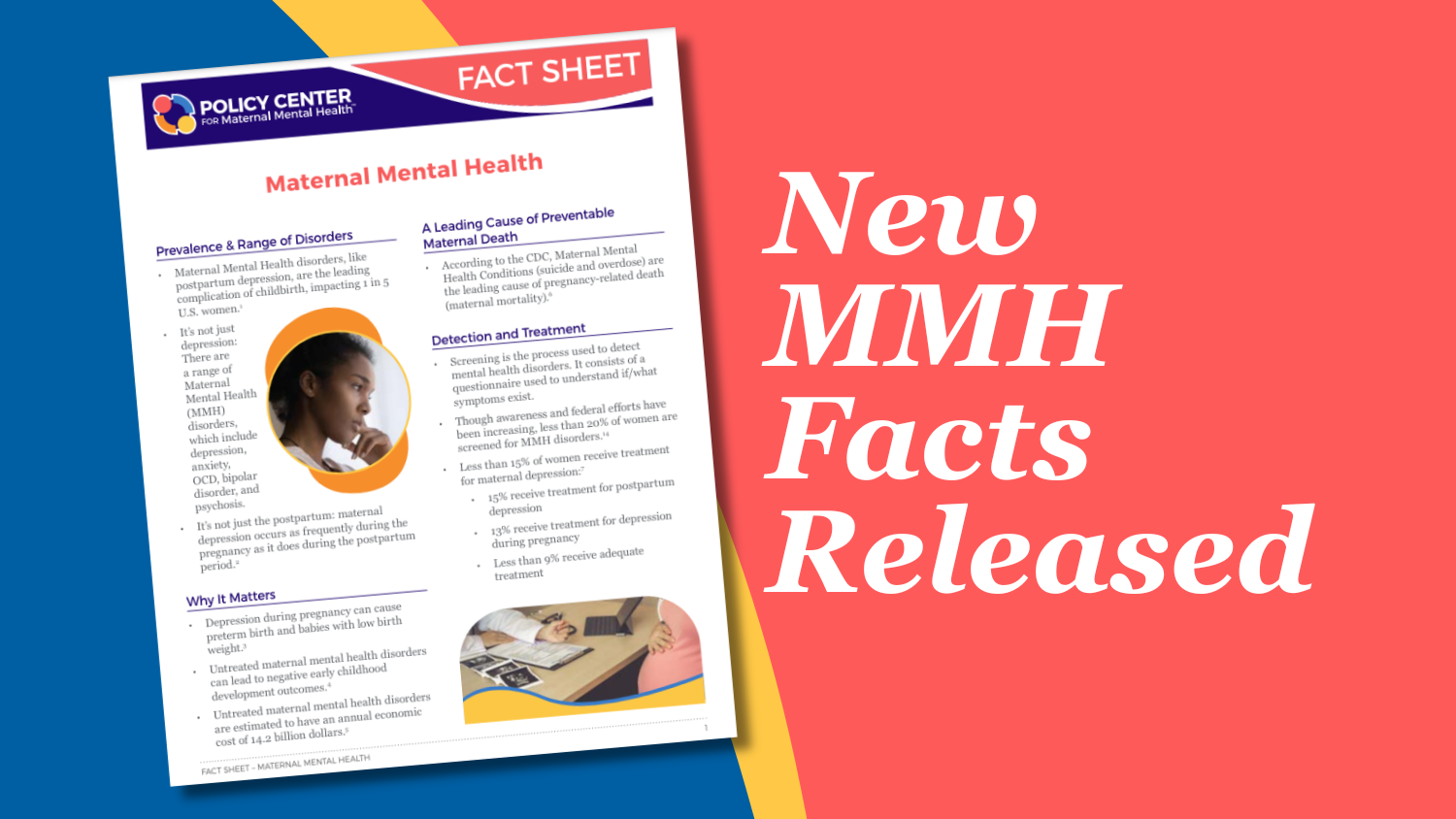
- Fact Sheet: Maternal Mental Health
- Universal Screening for Maternal Mental Health Disorders – Issue Brief
- Maternal OCD: Why We Must Understand and Do More (FORUM Session)
- Maternal Mental Health Screening
IOCDF Partnership Resources
References
- Fairbrother, N., Challacombe, F. L., Collardeau, F., & Truong, T. T. (2021). Perinatal and Postpartum Obsessive-Compulsive Disorder. In E. A. Storch, J. S. Abramowitz, & D. McKay (Eds.), Complexities in Obsessive Compulsive and Related Disorders: Advances in Conceptualization and Treatment (p. 0). Oxford University Press. https://doi.org/10.1093/med-psych/9780190052775.003.0014 ↩︎
- International OCD Foundation. How is Perinatal OCD Treated? https://iocdf.org/perinatal-ocd/how-is-perinatal-ocd-treated/ ↩︎