Our work shaping and reporting on national mental health policy is made possible through a capacity grant from the Perigee Fund.
The Trump Administration and Substance Abuse and Mental Health Services Administration (SAMHSA), recently announced two significant actions that signal increased attention to mental health and substance use recovery.
First, on January 29, President Trump announced the establishment of the White House Great American Recovery Initiative by Executive Order. The Initiative will be co-chaired by the Secretary of Health and Human Services, Robert F. Kennedy Jr. and Kathryn Burgum, the recently appointed Senior Advisor for Addiction Recovery. The Executive Director of the Initiative who will execute the day to day operations, has not yet been named.
The Recovery Initiative will focus on: implementing programs that integrate prevention, early intervention, treatment, recovery support, and re-entry; making recommendations to better coordinate the Federal Government’s response to the addiction crisis; and more broadly to increase awareness of the disease of addiction.
Additionally, on February 2, the Substance Abuse and Mental Health Services Administration (SAMHSA), distributed $794 million in block grant funding across the United States and territories for community-based mental health services and substance abuse treatment and prevention.
The funding includes $319 million for SAMHSA’s Community Mental Health Services Block Grant (MHBG), and $475 million for the agency’s Substance Use Prevention, Treatment, and Recovery Services Block Grant (SUBG) program. This funding represents the first allocation for the annual block grant awards.
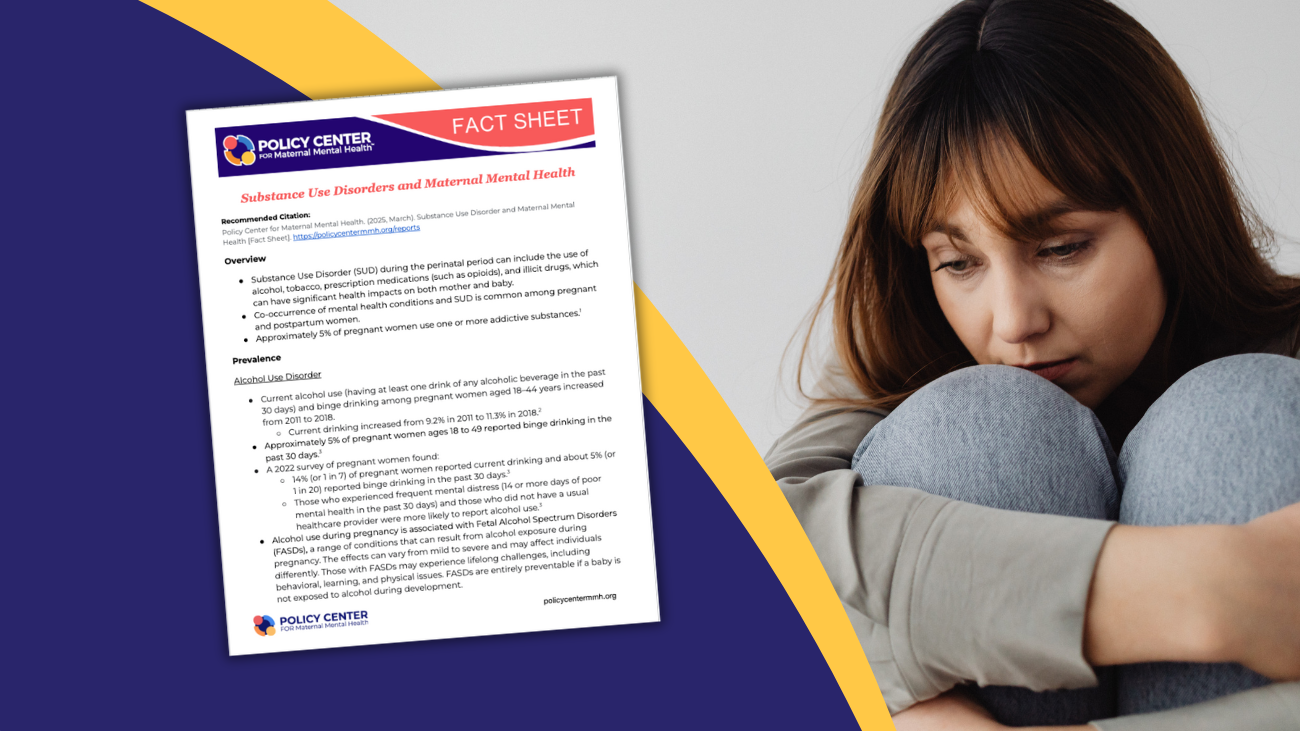
At the Policy Center, we recognize the profound intersection of substance use disorders and maternal mental health. Pregnancy and postpartum periods can be incredibly vulnerable times, and the presence of SUDs often complicates and exacerbates co-occurring maternal mental health conditions. Untreated maternal mental and substance use disorders are linked to high-risk pregnancies, poor infant health outcomes, and maternal mortality.
These announcements represent a powerful opportunity to ensure a mental health system that works for families, not against them. We will be closely tracking how states deploy these funds and how federal agencies implement the Recovery Initiative. Our goal remains clear: to ensure that parents and caregivers are not left behind in broader behavioral health reforms.