What are Maternity Care Deserts?
Maternity care deserts are geographic areas where there is limited or no access to obstetric care services, such as prenatal care, childbirth assistance, and postpartum care. Some causes of maternity care desserts in the U.S. include: closures of hospitals or obstetric units; shortages of health care providers, particularly obstetricians and midwives; and lack of transportation or insurance coverage. According to the March of Dimes, more than 35% of counties in the United States are maternity care deserts. This means that millions of women of childbearing age lack access to essential obstetric care. Maternity care deserts are a growing problem, particularly in rural and low-income areas. Efforts to address maternity care deserts are essential for improving maternal and infant health outcomes for all women.
What is a comprehensive Maternity Care Clinic (cMCC)?
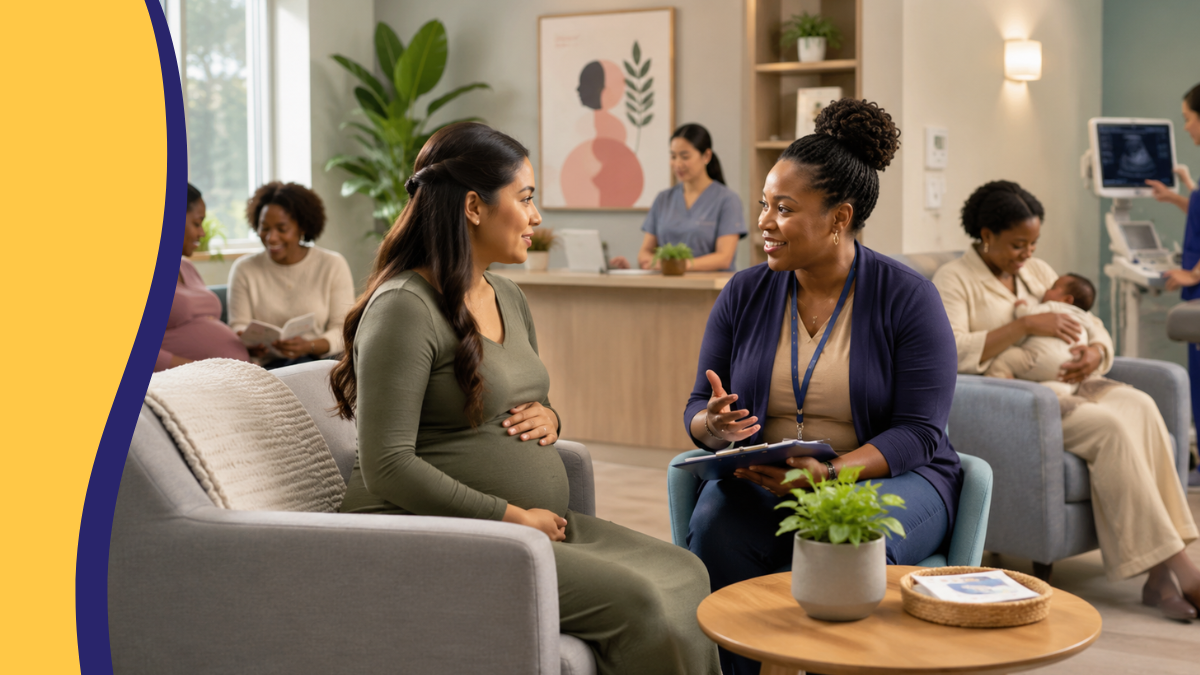
The Federal Maternal Mental Health Task Force recommended that the government pilot the creation of comprehensive Maternity Care Centers (cMCCs) to provide OB care in maternity care deserts, modeled on certified community behavioral health clinics (CCBHCs) and Community Health Centers (CHCs) that are federally qualified (FQHCs). A cMCC would provide OB care through team-based care, led by midwives and supported by OB/Gyns and doulas. cMCCs also include lactation support, mental health and pediatrics. A single nurse can care for both the mother and baby in the postpartum. Care can include group prenatal and dyadic parenting classes, home visits, telehealth and remote patient monitoring.
FQHCs, particularly those serving rural communities, represent a critical implementation partner for the cMMC model given their reach into underserved areas and their established role in delivering comprehensive primary and preventive care. A small but important subset of FQHCs demonstrates what is possible when comprehensive, integrated maternity care is fully embedded within this model.
Notably, five FQHCs nationally operate integrated or affiliated freestanding birth center models that combine primary care, midwifery-led maternity services, behavioral health, and wraparound supports within a single community-based system. The Parent Child Center, PCC Community Wellness Center, serving Chicago’s West and Northwest Sides and the near west suburbs through 15 clinics, represents one of the nation’s most advanced examples of integrated maternity care within an FQHC setting and is one of only four FQHCs operating a dedicated birth center. Its model emphasizes continuous, team-based care coordination, with midwives and family medicine physicians practicing within the same health centers, conducting interdisciplinary case reviews, jointly determining birth center eligibility through standardized pre-birth risk assessments, and maintaining shared care plans updated in the electronic health record. Established clinical protocols allow rapid consultation or referral to physicians or maternal–fetal medicine specialists when medical needs arise, ensuring seamless transitions between community-based and hospital care while preserving continuity for families.
Solution: Comprehensive Maternity Care Centers (cMCCs) in Obstetric Deserts
A Learning Collaborative
A primary strategy is to support existing FQHCs in expanding their services to include midwifery and other comprehensive services through a learning collaborative, hosted by the Institute for Medicaid Innovation. The series will include peer-to-peer exchange, technical assistance, and shared problem-solving focused on integrating midwifery, behavioral health, pediatric care, lactation support, and postpartum services within existing clinic infrastructure. Presenters will include leaders of current FQHCs providing cMCC services, ensuring that participating organizations learn from operationally tested models. The initiative will prioritize engagement of implementation-ready FQHCs located in maternity care deserts to accelerate expansion of comprehensive services where access gaps are greatest.
Policy Strategy: “Plant” Additional cMCCs
The field can adopt a “church-planting” model, a proven community expansion approach in which successful organizations mentor and replicate new sites in underserved areas through structured support, shared infrastructure, and leadership development. Applied to maternal health, this model positions FQHCs with integrated perinatal care as anchor institutions that help “plant” new cMCCs in obstetric deserts. With targeted philanthropic support, this replication strategy can accelerate the expansion of community-based maternity care infrastructure in obstetric deserts nationwide.
Policy Strategy: Federal Government
Advocacy organizations will urge Congress to establish a federal pilot program to develop cMCCs within FQHCs located in maternity care deserts, modeled after the successful Certified Community Behavioral Health Clinic Demonstration Program administered by the Substance Abuse and Mental Health Services Administration. Similar to how CCBHCs expanded access to integrated behavioral health services nationwide, a cMCC demonstration would pair clearly defined maternity care service standards with enhanced Medicaid reimbursement to support comprehensive, team-based perinatal care. Participating FQHCs would serve as community-based hubs providing integrated obstetric, midwifery, maternal mental health, pediatric, lactation, and postpartum support services, while generating data to inform long-term financing and national scale. This approach positions maternity care as essential health infrastructure and provides a scalable federal pathway to restore access in obstetric deserts.
Policy Strategy: State Governments
With the launch of the $50 billion Rural Health Transformation (RHT) Program and growing national attention to maternity care deserts, states and federal leaders now have a historic opportunity to turn these recommendations into reality by investing in integrated cMCCs within existing community infrastructure, including FQHCs and regional perinatal systems.
States can use Rural Health Transformation Program funds to pilot cMCCs modeled after Georgia’s RPC Program, FQHCs, or the Certified Community Behavioral Health Clinic (CCBHC) model, delivering critical obstetric and behavioral health services in the same facility. The thinking is that just as fire departments, libraries, and schools are critical infrastructure, so is maternity care. cMCCs can offer comprehensive support, including postpartum home visiting, dyadic mother-baby classes and support groups, parenting and infant development classes for both mothers and fathers, and support with practical needs when warranted.
What to know more about and help spread the model? Contact us at [email protected]