At the Policy Center for Maternal Mental Health, our North Star remains the same:
A U.S. healthcare system that routinely detects and effectively treats maternal mental health disorders — Every Mother, Every Time.
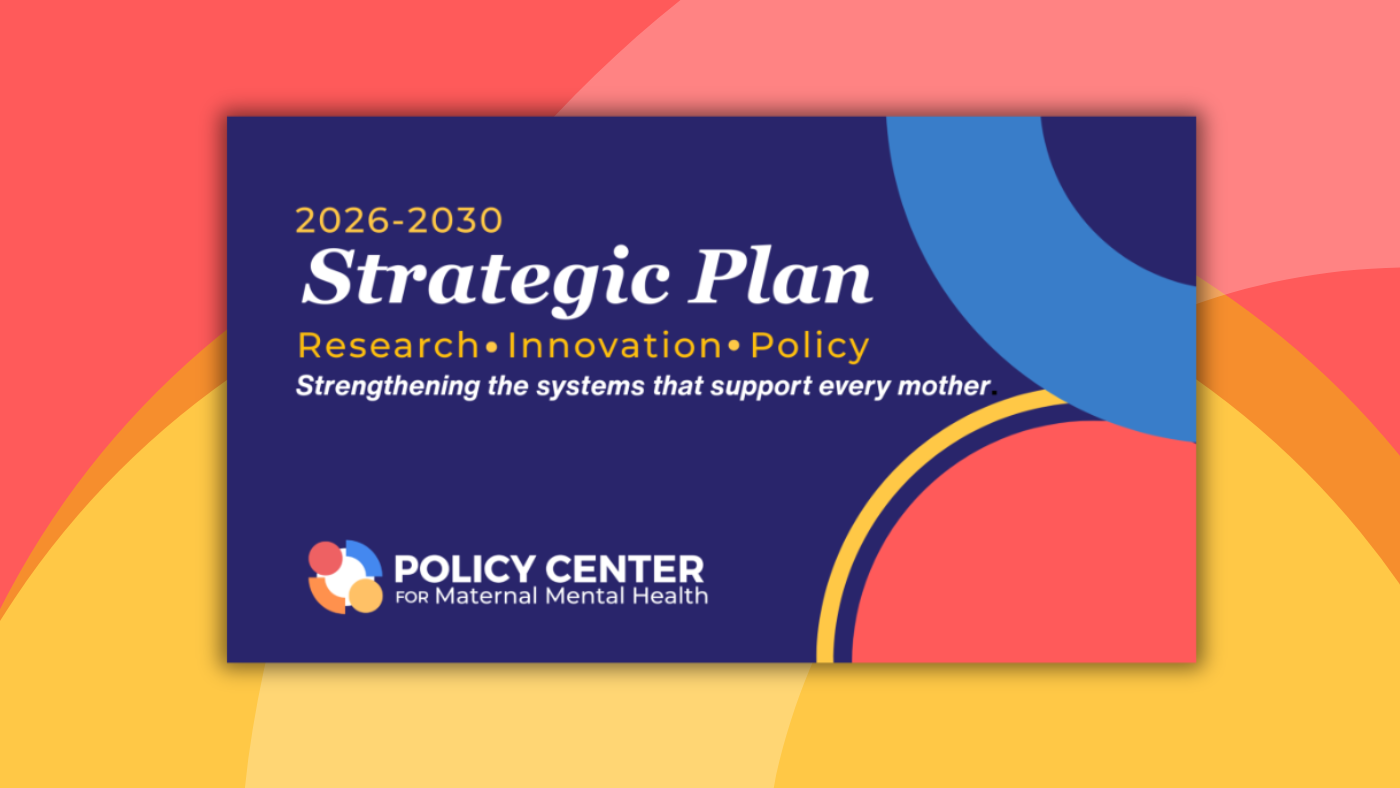
As we launch our 2026–2030 Strategic Plan, we want to share what’s staying the same — and how we are refining our strategies to accelerate progress.
What’s Staying the Same
Our mission, vision, and values remain steady. We are still focused on closing gaps in maternal mental health care through health delivery system change, grounded in our research and reporting, and our corresponding policy frameworks.
We will continue to do this work in collaboration with the 4 key players we serve – our “4Ps”:
- Payors (Insurers, Medicaid Agencies, and Employer Purchasers)
- Policy Makers (Federal and State, Legislative and Agency)
- Providers (Obstetrics)
- Partners (Philanthropy, National Non-Profits, Community-Based Organizations, and Researchers)
Our core focus areas also remain the same:
- Appropriate screening/detection
- Available evidence-based treatments, qualified providers, and the full continuum of care
- Ample Insurance
- Coverage of range of evidence-based services and treatments
- Low or no copays/coinsurance for maternity and maternal mental health care
- Adequate payment to providers
This foundation is strong, and it remains the same.
What’s Evolving: How We Get There
While our destination hasn’t changed, the healthcare landscape has. We’ve learned where change moves fastest, and where it gets stuck. Our updated strategy reflects those lessons. We are:
1. Leaning Into Behavioral Health Integration (BHI)
We are doubling down on integrating mental health into maternity care, starting in pregnancy and expanding through the full year postpartum.
Why? Because we must medicalize maternal mental health disorders just as any other biological disorder is, like gestational diabetes, for example. When obstetric providers screen, they normalize that maternal mental health disorders are the number one complication of pregnancy and the postpartum period. We also must screen starting in pregnancy, given that ⅓ of mothers enter pregnancy with untreated depression or anxiety, and ⅓ more will have a new onset during pregnancy. These disorders are a leading cause of preterm birth and low birth weight, which are tied to higher rates of infant mortality and lifelong complications. When we identify and treat in pregnancy we can prevent so much suffering. We also are working to ensure that obstetric providers are reimbursed fairly for these services provided in pregnancy and through the postpartum period.
This means we are:
- Promoting reimbursement reform to support integrated care
- Advancing adoption of HEDIS screening and follow-up measures
- Piloting behavioral health integration in OB clinics, including Community Health Worker (CHW) integration
- Refining billing guidance to make integration financially sustainable
- Promoting a national OB/PCP telepsychiatry consultation
- Supporting adoption of the maternal suicide care pathway
2. Expanding Technical Assistance to States
Over the past fifteen years, we’ve helped shape the field. Now, we are increasingly helping states implement change.
We are continuing or expanding our technical assistance to support:
- State Medicaid agencies
- Rural Health Transformation leaders
- Perinatal Quality Collaboratives (PQCs)
- Legislative offices
- Nonprofit advocacy organizations that graduated from our Fellows programs
Our work includes:
- Model legislation and legislative tracking
- Medicaid policy, including quality measurement and financing
- Network adequacy guidance
- HEDIS adoption and quality improvement support
- Coverage and payment reform strategy
States need actionable, evidence-based guidance at this moment. We are filling this need.
3. Strengthening the Policy–Implementation Bridge
We’ve always been known for understanding the complex U.S. health delivery system — payment, quality metrics, insurance design, and network adequacy. This systems expertise remains our differentiator.
In this next phase, we are strengthening the bridge between:
- Research and implementation
- Legislation and operationalization
- Screening mandates and measurable follow-through
- Coverage on paper and care in practice
Because coverage without implementation does not save lives.
Continuing to Inform and Convene the Field
Our commitment to informing and connecting cross-sector leaders remains strong.
We will continue to:
- Release report cards, issue briefs, and legislative updates
- Host our annual Maternal Mental Health FORUM (800+ leaders)
- Provide technical assistance to Congress and federal agencies, including the Centers for Medicare and Medicaid Services
- Share data, research, and policy analysis
We remain field catalysts, igniting cross-sector systems change insurers, lawmakers, providers, researchers, and advocates.